
Sustainable Raincoats: Staying Dry Without Drowning in Plastic
Living in the UK, the land of “all four seasons in a day” means a decent raincoat is practically a wardrobe essential!
The good news is that we no longer have to choose between getting soaked and wrapping ourselves in yet another layer of virgin plastic. There are now some genuinely lovely raincoats made with natural or recycled fibres – from classic trenches and casual parkas to lightweight jackets you can fold into a bag.
Who knew sustainable waterproofs could look so good?!
What is the problem with plastic raincoats?
Most conventional raincoats are made from synthetic materials such as virgin polyester or nylon. These fabrics are popular because they are lightweight, durable and relatively inexpensive – but they are also plastics made from fossil fuels. European Environment Agency
That creates a few problems:
- They rely on non-renewable resources. Producing virgin synthetic fibres requires more oil and gas extraction.
- They can shed microplastics. Tiny fibres may be released as synthetic clothing is worn and washed, contributing to microplastic pollution. European Environment Agency
- They do not readily biodegrade. If a plastic raincoat is thrown away, it may remain in landfill for a very long time.
- They can be difficult to recycle. Linings, membranes, coatings, zips and blended fabrics can make an otherwise useful coat complicated to process at the end of its life.
Of course, the answer is not to throw away the plastic raincoat you already own. The most sustainable coat is usually the one already hanging by your front door! Wear it, care for it, repair it and keep it in use for as long as possible.
But when it really is time to replace it, there are better materials to look for.
Natural-fibre raincoats
A natural-fibre raincoat sounds like an impossible thing, doesn’t it? Yet pre-plastics generations were able to keep themselves dry. Yet we think of cotton and rain not being the most promising combination!
However, tightly woven cotton and organic cotton can be combined with clever waterproof membranes, finishes and construction techniques to create practical coats that keep the weather out. Cotton is renewable and avoids using a fossil-fuel-derived synthetic fabric for the main outer material.
Waxed cotton is another option well worth considering. Instead of relying on a conventional plastic outer fabric, these jackets use tightly woven cotton treated with wax to create a weather-resistant surface. They are particularly good for country walks, dog walks, gardening and everyday drizzle. The fabric is robust, develops character with age and can be rewaxed rather than replaced when its weather resistance begins to fade. This makes a good waxed jacket a lovely example of buying once and maintaining what you own.
There are a few things to bear in mind. Waxed cotton is generally weather-resistant rather than fully waterproof technical rainwear, so it may not be the best choice for hours of heavy rain. It can also feel heavier than a lightweight pack-a-mac, needs periodic rewaxing and should normally be sponge-cleaned rather than put in the washing machine. Linings and trims may still contain synthetic fibres, too, so check the full composition.
Natural fibres can also feel softer, quieter and more breathable than that traditional swish-swish plastic raincoat fabric.
There is an important caveat: natural does not automatically mean impact-free. Cotton requires land and water, and the waterproof membrane, coating, lining or trims may still contain synthetic materials. It is worth looking beyond the headline fibre and checking the full composition, waterproof rating and care instructions.
However, the aim is not perfection. It is choosing a coat with thoughtfully selected materials that you will wear for years and years.
What about recycled fibres?
Recycled polyester and recycled nylon still contain plastic, so they are not a complete solution. They can continue to shed synthetic microfibres and may not be recyclable again, particularly when mixed with other materials.
However, recycled fibres make use of material that already exists and can reduce demand for newly manufactured, fossil-based fibres. For technical outerwear, where strength, low weight and dependable weather protection matter, this can be a useful alternative to virgin synthetics.
Think of recycled material as a better use of plastic rather than the end of the plastic problem.
Sustainable raincoats available in the UK
Seasalt Cornwall
Seasalt Cornwall has a brilliant range if you prefer something that looks like a proper everyday coat rather than hiking gear.
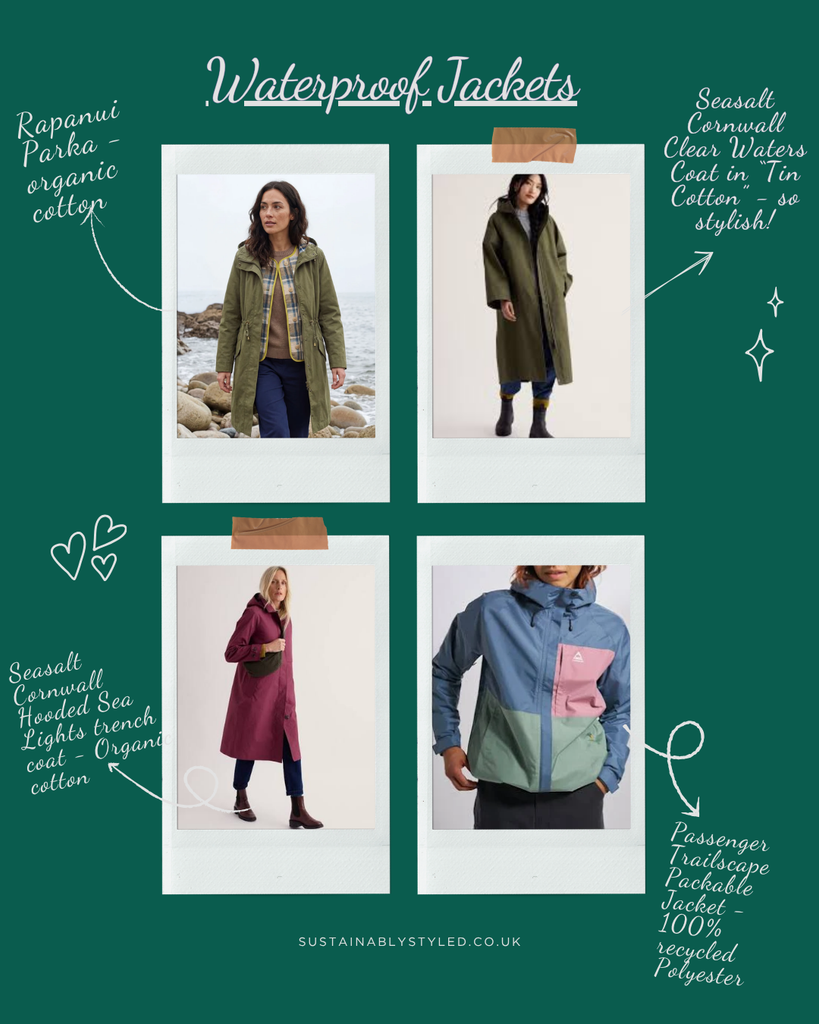
There is a wonderful variety of shapes, including A-line parkas, longline coats, short jackets, classic macs and smart waterproof trenches. Current styles include the Coverack Coat, Janelle Jacket, Clear Waters Coat, Sea Lights Trench, Cloudburst Mac and a rather clever Reversible Raincoat.
Selected coats are available in petite, regular and tall fits, which is extremely useful when you are investing in something you hope to wear for years. Seasalt says its rainwear can offer waterproof and breathability ratings of up to 5,000mm, with fully taped seams – exactly the sort of practical detail worth checking before buying.
Look closely at the composition of each individual style. Some options use organic cotton, while others use recycled or synthetic performance materials. The range changes, so the product description is the best place to check the outer, lining, membrane and waterproof finish before ordering.
These are lovely options if you want a raincoat that works over jeans at the weekend but still looks smart enough for work.
Rapanui
For something lightweight, packable and a little more casual, have a look at Rapanui’s women’s raincoats.
They have a Women’s Lightweight Raincoat with colours including Atlantic, khaki, woodland, yellow and black. There is also an Oversized Lightweight Raincoat, offering a roomier fit.
Rapanui says it uses recycled materials for its outerwear and designs its raincoats for circularity, with the intention that they can be remanufactured at the end of their useful life. That end-of-life thinking is a really positive addition – particularly for technical clothing, which can otherwise be difficult to recycle. They also have organic cotton parkas which are longer in length and have an eco-friendly water-repellent coating with a cosy cotton flannel lining.
These are the sort of coats that are easy to keep by the door, take on a dog walk or tuck into a bag when the forecast cannot make up its mind. In other words: ideal for the British weather!
Barbour
Barbour is probably the best-known UK option for waxed jackets. Its classic waxed styles include the Bedale, Beadnell and Acorn, with different lengths and fits available. Prices are firmly in investment-piece territory, but these jackets are designed to be rewaxed and repaired. Barbour says that, with proper care, its waxed cotton jackets can last for many years; it offers professional rewaxing, repairs and alterations, as well as instructions for rewaxing at home. Barbour also runs its Re-Loved programme, which restores old waxed jackets and gives them a new lease of life.
That longevity is the real sustainability win.
Buying second-hand is a particularly good option here. Vintage Barbour jackets are widely available on Vinted, eBay and specialist resale sites, and a worn-looking jacket may simply need a clean, repair or fresh coat of wax. Ask for measurements and photographs of the cuffs, zip, lining and areas where the fabric repeatedly folds. With a little care, an older waxed jacket could have many rainy years left in it!
How to choose the right coat
A sustainable raincoat is only sustainable if you actually wear it, so be honest about what your everyday life requires.
Before buying, consider:
- Weather protection: Do you need a fully waterproof coat with taped seams, or will a water-resistant layer cover the occasional shower?
- Length: A cropped jacket may be easy to carry, but a longer coat will protect more of you in sideways rain!
- Breathability: This is especially important for walking, cycling and commuting.
- Layers: Make sure there is enough room underneath for a jumper in winter.
- Materials: Check the outer fabric, membrane, lining and waterproof finish rather than relying on one sustainability claim.
- Care and repair: Find out whether the coat can be reproofed, repaired or returned at the end of its life.
- Style: Choose something you will still love in five years, not just something that suits this season.
Think in cost per wear
A well-made raincoat can feel like an investment, but this is one item you might wear almost every day for six months of the year, every year.
Imagine a £180 coat worn 120 times a year for five years. That works out at just 30p per wear – and the cost keeps falling the longer you use it.
Suddenly, buying one coat that fits beautifully and does its job feels far more sensible than working through several cheap ones that leak, tear or lose their coating.
Do not forget second-hand
Vinted, eBay and charity shops can be brilliant places to find good-quality waterproof coats for much less.
Just be careful to ask for:
- The chest, waist and hip measurements
- The shoulder width and sleeve length
- The full length of the coat
- Photographs of the cuffs, seams and zip
- Details of any peeling, flaking or damage to the waterproof layer
- Whether the coat still keeps out rain or needs reproofing
Sizing labels vary, and a raincoat needs enough room for the layers you plan to wear underneath, so measurements really are your friend!
The final word
There is no completely impact-free raincoat. Natural fibres still require resources, while recycled synthetics are still plastic. The more useful question is: Which coat uses better materials, performs properly and will stay in my wardrobe for the longest time?
Choose one you genuinely love, look after it and wear it relentlessly. Casual parka, minimalist jacket, smart trench or cheerful pack-a-mac – there really is something for everyone now.
And with British weather, no doubt, your cost per wear will be wonderfully low!