
Your clothes were never meant to fit you… and that’s not your fault. There, I said it.
Clothes shopping can be challenging for many reasons. But if you have a shape that doesn’t fit the “standard” (whatever that is!) it can feel very depressing. Sizing that is all over the place, the current over-sized trend, or brands ignoring the more mature body… it all adds up to you feeling like you are the problem. Spoiler alert – you’re not!!
History
Pre-1900, clothes were tailor-made to fit the wearer. With the industrial revolution, ready-to-wear clothing became available. Production increased throughout the 20th Century with more women entering the workplace having less time to sew, the loss of those skills being passed down and the rise of cheaper fabrics and manufacturing processes. Even so, clothing up until 1960’s was made with longevity in mind, quality fabrics and generous seam allowances for the ability to be re-sized. Clothing alterations were the norm!
Now
Body measurements:
The truth is that you are now unlikely to be the standard measurements for one dress size in a high street shop. And if you are, you are unlikely to meet measurements for the same dress size in a different shop.
Why?…
Although most brands cluster their sizing around similar (but not the same!) body measurements, there is no one single enforced “standard” across the high street. Each retailer will chose an average bust, waist, hips ratio. The human body is rarely “average”. Even if you have a exact measurements, width-wise – bust, waist, and hips – in order to fit into their standard size, you also need to be the “right height” with the same vertical proportions too. Most brands caterer for an average height of around 5ft 5″-5ft 6″.
Your shape will also change over time. With age, women tend to naturally become fuller around the middle. There may also be medical, hormonal or other factors outside of your control that can cause changes to your shape. And it’s true that most brands do not cater for a more mature body-shape.
Industry changes
Because women’s clothing sizes have never been standardised, they can change over time. Sizing has generally become more generous over time – this is called “sizing-creep” or “vanity-sizing”. If a garment is more than 10 years old, you are likely to need a bigger size. So when shopping vintage, you will need to size up!
Garment construction
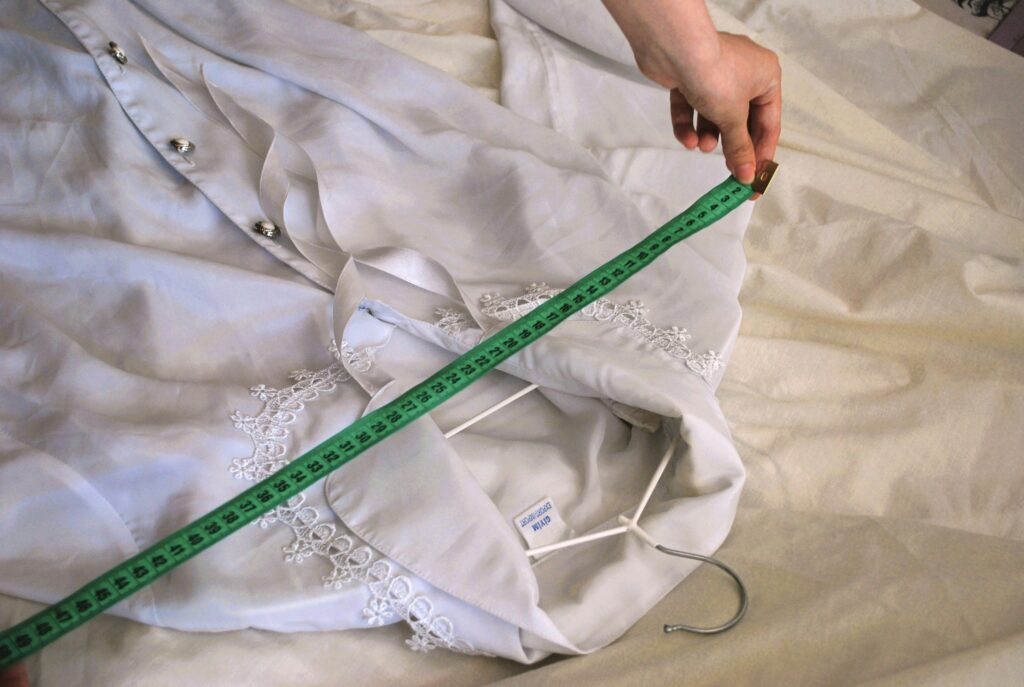
Then we need to talk about fit and fabric. Garments of the same dress size vary wildly when the desired fit is different. i.e. a form-fitting dress will have smaller measurements than an over-sized smock dress.
Choosing the right size will also depend on how much space you like in your clothing. The difference between the measurements of the body to the measurements of a garment is called “ease”. A bodycon dress is intended to hug the body and will be constructed from stretchy materials, so it will have, what’s called negative ease i.e. the dress will be smaller than the body in places to create the desired silhouette. An oversized dress will have positive ease, providing space between your body and the dress.
The fabrication is also important. A stretchy fabric has more tolerance in size and so is likely to fit more people.
So what to do
- 1. It is important to focus on how the garment fits you and how it makes you feel, rather than the arbitrary number on the tag. I appreciate this is easier said than done when we have been indoctrinated into caring so much about it.
- 2. Learn how you like your fit. Personally, I like a regular fit so I will size-up clothing designed to be a tighter fit and size-down in a boxier/over-sized style. You can also go for garments with a bit a stretch for built-in tolerance in your clothing – great for body fluctuations!
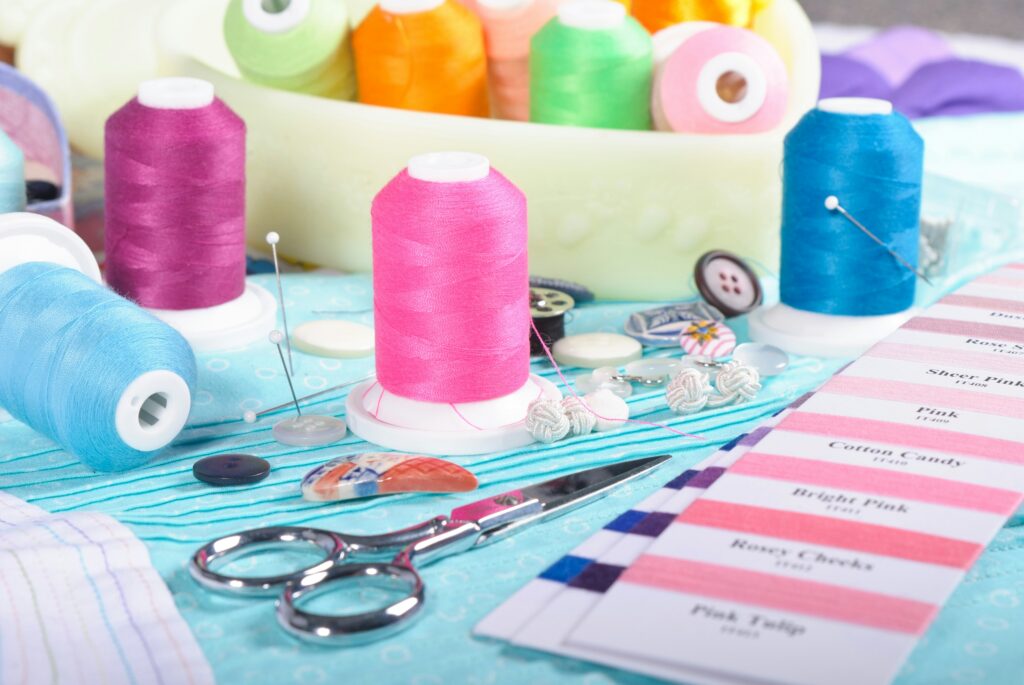
- 3. Learn some basic sewing skills. Adding a popper or adjusting a length of elastic, for example, can do wonders for how garments fit and therefore keep clothing in regular usage. Check out my previous alterations post for inspiration.
- 4. Really understanding your body-shape and how garments will interact with it. For example, if you have a high waist to hip ratio, i.e. your hips/bum are much larger than your waist finding trousers can be difficult and certain shapes will not fit well. In this case I would avoid off-the-peg trousers with a fixed waistband and traditional pockets. In a size that fits your waist, the pockets will “pull” open in order to accommodate a larger hip. In a size that fits your hips, the waist will be gaping and a belt will cause the excess fabric to bunch up and be uncomfortable. Better to go for well pleated trousers or elasticated waists that are designed to make room for your curves. These are the types of information you receive as part of my “Understand” package.
- 5. Sew your own clothes. I cannot tell you how much joy I get from wearing clothes that actually fit me, that are the colour and pattern I want and that I like!
So, it’s not you… it’s your clothes. There’s nothing wrong with you. I hope this helps!